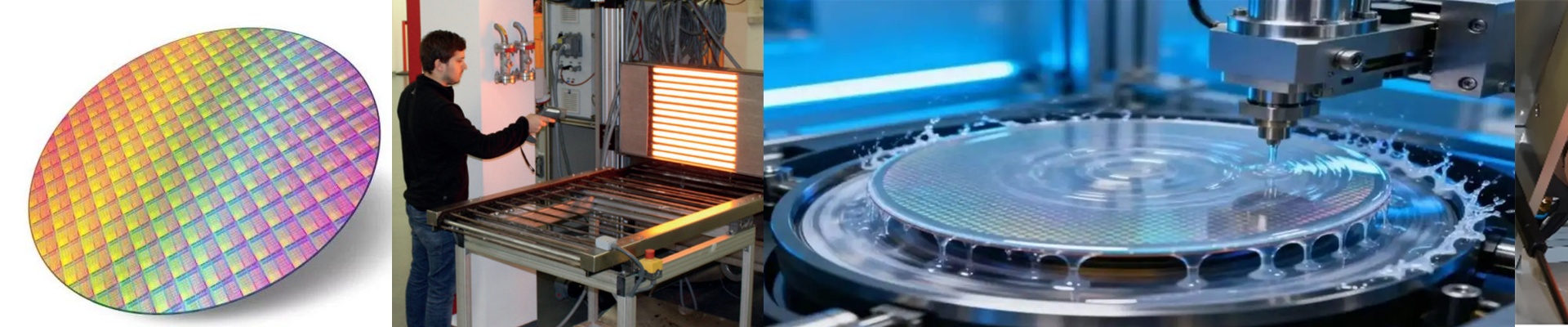


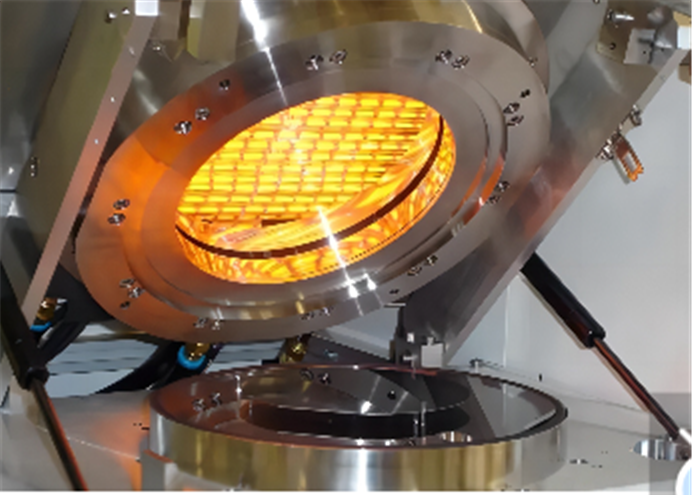
Out on the floor, the tracker keeps its steady beat. You feel the cleanroom air on your skin, and you feel the pressure, too. One oven is drifting. The temperature spread across the boat is widening, and the photoresist profile starts to tilt. Yield is slipping, and you’re watching it happen in real time. Most times, the root cause is the heater. After thousands of bake cycles, the element ages, uniformity shifts, and the control loop spends its days chasing the setpoint. The thermal budget no longer lines up with the photolithography spec. You don’t need a new tool. You need a replacement heater that puts you back inside the original thermal intent of the process.
What matters, technically
In semiconductor thermal systems, the only number that counts is what you can hold on the wafer. We build this replacement heater around one target: ±0.1°C uniformity across the active zone. That isn’t a marketing line—it’s the boundary that keeps critical dimensions within spec after soft bake and hard bake. We get there by controlling heat transfer at the source. The element is configured for fast, stable response with low thermal inertia, so setpoint changes translate to platen behavior without overshoot. Sensor placement matches the original equipment geometry, and the control strategy is tuned to chamber mass and airflow. The real readout isn’t heater temperature. It’s a repeatable temperature map on the wafer. Cleanroom compatibility is table stakes. Materials are selected for Class 1–100 constraints, with surface finishes and seals that keep particle generation at zero. No outgassing, no shedding, no carbon track. And the heater is built to drop into the existing envelope—standard mounting and termination that match the OEM footprint. Reliability is measured in uptime. We specify the unit for 24/7 fabs, and life testing runs under thermal cycling that mirrors production bake profiles. Units have stacked up 5,000+ hours with under 5% output drift, and the control loop stays stable over long campaigns.
Why this works where you live
You run photoresist bakes where temperature uniformity directly defines linewidth distribution. A drift of a few tenths of a degree can push the dose window, and focus latitude shrinks before it shows up on the SEM. Swap in a heater that holds ±0.1°C across the wafer, and you restore process repeatability. The offsets stop, and the rework queue gets smaller. The replacement also recovers thermal efficiency. Aged heaters run hotter at the element while the chamber loses consistency, wasting energy and stressing the cooling path. A fresh, properly matched heater reduces the control loop’s compensating work, so average power draw drops while the bake profile stays exact. You see the savings in kWh per lot, and the equipment runs quieter because the loop isn’t fighting itself. This matters in lithography clusters where the bake step sets photoresist flow and adhesion. It matters in track integration where thermal history has to be identical lot after lot. It matters in packaging lines where the thermal profile on substrates and underfills has to match the original qualification. In all of these, the heater isn’t just a component—it’s the boundary condition of the process. You also get schedule stability. A heater replacement that matches the original footprint and interface means less changeover. No re-qualification campaigns. No re-validation of the whole thermal stack. Pull the old unit, drop in the replacement, and get back to the qualified process window.
The practical details
This heater is engineered to fit existing tools, but the interface isn’t universal. Match the mounting pattern, clearance, and termination style to the chamber. Confirm sensor type and position, and make sure the controller can handle the heater’s electrical characteristics. If the controller is older, consider a matched pair upgrade at the same time—a new heater alone can’t fix a loop that’s under-tuned or saturated. Treat the install like a mini-PM. Control ESD, use clean tools, and keep the local particle environment tight. After the swap, run a full thermal mapping with your standard qualification wafers and log uniformity across the bake curve. That first run isn’t just a check—it’s the baseline for the next campaign. One constraint worth calling out: the heater can hold ±0.1°C under normal airflow and load, but it can’t fix blocked air paths or a degraded chamber seal. If mechanical wear has changed convection, you may see better repeatability, but you won’t recover the original map. In those cases, pair the heater replacement with a chamber inspection and seal refresh. If you’re seeing drift, uniformity spreading, or rising rework in bake steps, the heater is the likely failure point. Replace it with a unit built to the thermal intent of the process, and the line will run the way it did on day one. We design the replacement around the process, not a catalog. You get the precision required for wafer-level control, the cleanliness the cleanroom demands, and the reliability production expects. That’s how you keep the line moving and yield on the rise.